
About Us
Independent investment management, research-driven and customized to the goals of every investor we serve.
WHO WE ARE
Gaard Capital LLC is an independent registered investment adviser (RIA), established in 2025 to serve institutions, families, and retirement plans.
As an independent firm, we focus solely on your best interests, with no upselling, hidden fees, or proprietary products.

HOW WE INVEST
Our Investment Philosophy
We design evidence-based portfolios grounded in rigorous academic research.
Low Cost, at Every Step
Prioritizing low costs every step of the way, from management fees to investment vehicles.
Customization
We design evidence-based portfolios grounded in rigorous academic research.
Strategic Diversification
Rather than timing the market, we diversify across domestic and international markets, favoring low-cost ETFs.
Quantitative Allocation
We monitor key economic indicators, making tactical adjustments only when data warrants.
Liquidity
Favoring liquid, transparent investments, avoiding the lock-ups and layered fees of private funds.
Customization
From investment policy to portfolio construction, we customize every aspect to reflect your unique needs.
Strategic Diversification
Rather than timing the market, we diversify across domestic and international markets, favoring low-cost ETFs.
Quantitative Allocation
We monitor key economic indicators, making tactical adjustments only when data warrants.
Liquidity
Favoring liquid, transparent investments, avoiding the lock-ups and layered fees of private funds
Small Fees,Big Differences
Markets are nearly impossible to predict, but fees are one of the few things investors can control. That is why we believe it is important for investors to understand the fees they pay.
Even a small difference in fees can significantly impact performance over time.
Hypothetical Growth of $1,000,000
30 years at an assumed 7% annual return, after advisory fees
Important Information: This illustration is hypothetical and is provided for educational purposes only. It does not represent the results of any actual account or reflect any particular investment. All scenarios assume an initial investment of $1,000,000 over a 30-year period at an assumed annual return of 7%, with returns reinvested and the advisory fee deducted at the end of each year as the only variable. The assumed rate of return is not guaranteed and does not constitute a projection, target, or expected return of Gaard Capital, LLC. This illustration reflects the deduction of the advisory fee only. Underlying fund expenses, custodial costs, and transaction costs would further reduce the results shown, and the balances do not reflect any taxes or penalties that may be due. Gaard's advisory fee does not exceed 0.50% annually. Investing involves risk, including the possible loss of principal.
Source: Gaard Capital calculations.
Leadership
Meet Our Founder
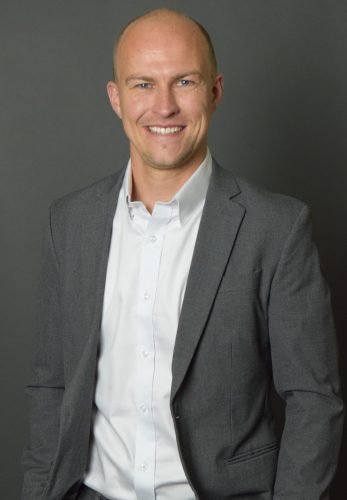
Dr. Jonathan Brogaard
FOUNDER & CHIEF INVESTMENT OFFICER
Background
Dr. Brogaard is the founder and Chief Investment Officer of Gaard Capital and a tenured Professor of Finance at the University of Utah’s David Eccles School of Business, bringing more than 15 years of experience across academic research, institutional asset management, and investment consulting. He holds the CFA and CAIA designations. He earned his B.A. in Economics and Politics from Occidental College, and his Ph.D. in Finance and J.D. from Northwestern University.
What is an OCIO?
An Outsourced Chief Investment Officer (OCIO) is a fiduciary partner that manages day-to-day investment responsibilities on behalf of an organization. Under this structure, the asset owner defines objectives such as return goals, risk tolerance, and spending policy, while the OCIO implements, monitors, and reports on the investment strategy in alignment with those objectives.
Who can benefit from the OCIO model?
OCIO services are designed for organizations that want to maintain control over their investment objectives while relying on professional management and oversight.
Examples of institutions that may benefit include:
- Endowments
- Foundations and other charitable organizations
- Pension and retirement plans
- Healthcare systems
- Insurance providers
- Trusts and other long-term investment entities
Why do organizations adopt OCIO services?
Many organizations engage an OCIO to strengthen investment governance, enhance oversight, and maintain consistency in executing policy decisions. The OCIO model allows boards and committees to focus on mission and strategy while delegating portfolio implementation to experienced professionals who operate within defined guidelines.
How can an OCIO help organizations with limited resources?
For organizations without dedicated investment staff, the OCIO provides professional management, reporting, and operational coordination. This structure can reduce administrative workload, allowing boards and employees to concentrate on the organization’s mission while maintaining sound oversight of invested assets.
How can an OCIO improve access to investment opportunities?
An OCIO often provides broader access to institutional investment opportunities that may be difficult for individual organizations to source or evaluate independently. By leveraging established research networks, manager due-diligence processes, and scalable investment platforms, the OCIO can identify and implement strategies across a wide range of asset classes. This approach helps align portfolio construction with the organization’s objectives and with the evolving opportunity set in the market.
How does an OCIO improve governance and decision-making?
An OCIO brings structure and accountability to the investment process. Rather than relying solely on periodic meetings or delayed data, the OCIO provides ongoing monitoring and can implement portfolio adjustments in accordance with established policies. This approach supports transparency, responsiveness, and clear documentation of fiduciary actions.
How can an OCIO support investment outcomes over time?
The OCIO model is designed to help organizations maintain alignment between their investment policy and long-term objectives. Through disciplined rebalancing, diversified implementation, and cost-efficient execution, the OCIO seeks to support portfolio consistency through changing market conditions.
How does an OCIO manage risk and enhance portfolio oversight?
An OCIO monitors portfolios on an ongoing basis to evaluate exposures, liquidity, and compliance with investment policies. By integrating research, analytics, and regular reporting, the OCIO helps identify potential risks early and provides visibility into how portfolio positioning aligns with defined objectives.
Can an OCIO help reduce costs or improve operational efficiency?
An OCIO can simplify investment operations by consolidating oversight, reporting, and manager coordination. Larger OCIO platforms may also have the ability to negotiate more favorable fees with investment managers, creating potential efficiencies that individual organizations might not achieve on their own.
What should organizations look for when choosing an OCIO partner?
Key factors include fiduciary alignment, investment philosophy, transparency in communication, and experience with similar types of institutions. It is important to evaluate how an OCIO’s governance model and decision-making process integrate with the organization’s existing oversight framework.
Is every OCIO engagement the same, or can it be customized?
OCIO relationships can be structured to meet each organization’s specific needs. Some clients delegate full discretion for portfolio implementation, while others retain certain responsibilities such as manager selection or policy updates. A tailored OCIO arrangement can reflect the governance structure, objectives, and operational capacity of each organization.
Still Have Questions About Us and How We Can Help Your Organization?
Please fill out the form below with any additional inquiries, concerns, or comments. Our expert team will get back to you as soon as possible.